

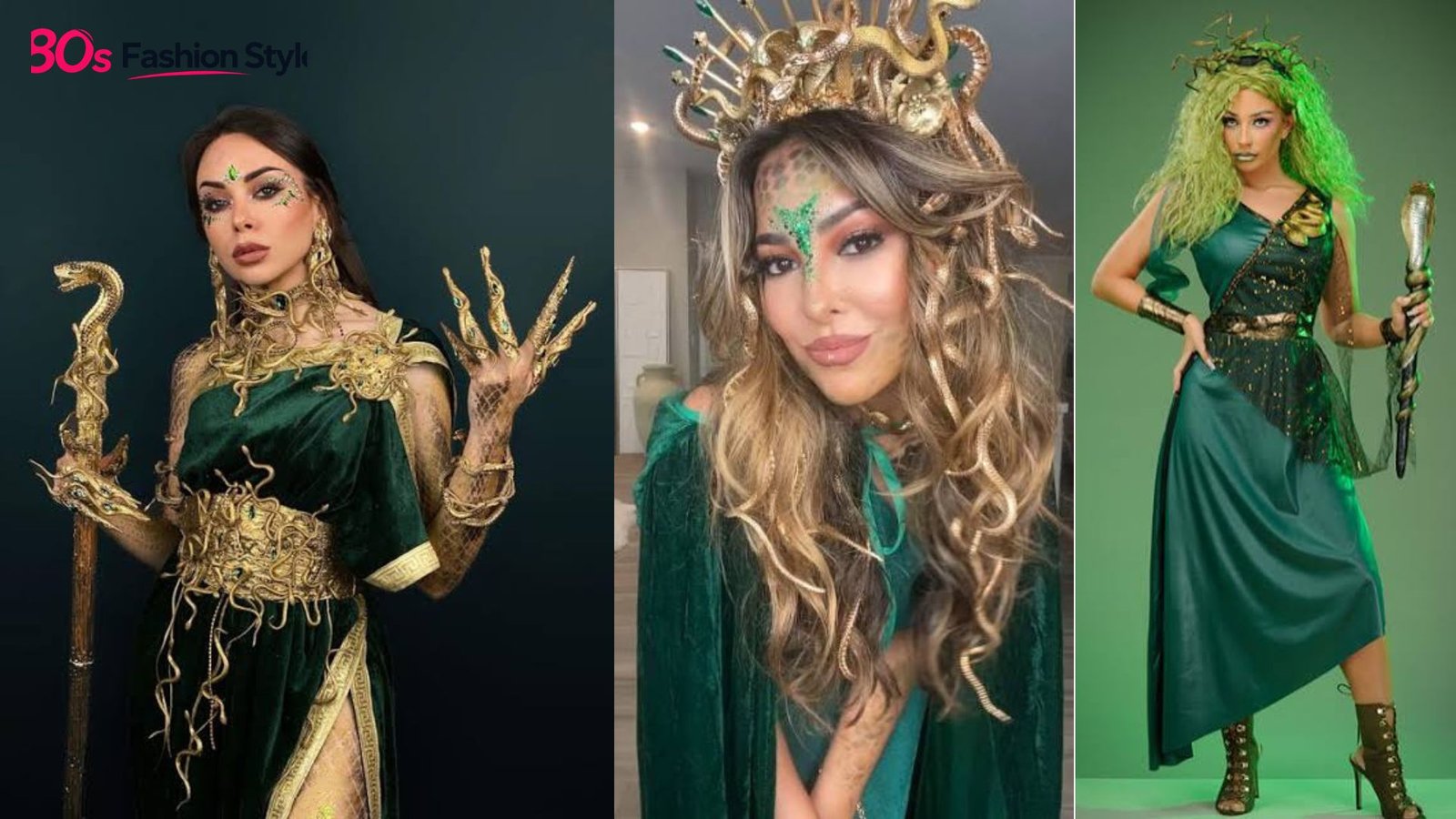
A Medusa costume can be glamorous, frightening, dramatic, or surprisingly simple. The character’s instantly recognizable features—serpent-covered hair, an intense stare, and ancient Greek-inspired styling—give you plenty of room to create a distinctive Halloween look without relying on a generic monster design.
Medusa is one of the Gorgons in Greek mythology and is traditionally associated with a gaze capable of turning people to stone. Ancient Greek and Roman artists portrayed her in different ways, ranging from a fierce creature to a more human-looking woman. Her image was also used as a protective symbol, particularly on shields and armor.
That history makes the character especially useful for costume design: you can build a look around mythology while still choosing the colors, makeup, clothing, and level of theatrical detail that suit you.
What Makes a Medusa Costume Instantly Recognizable?
The most important visual element is the snake hair. You do not need dozens of realistic snakes to communicate the character. A handful of lightweight rubber, plastic, or fabric snakes woven through a wig can create the effect.
The second major feature is the face. Dark eye makeup, metallic accents, sharp contouring, and a dramatic lip can make the character recognizable without requiring complicated prosthetics.
Clothing provides the third layer. Draped fabrics, gold details, sandals, cuffs, belts, and jewelry can suggest an ancient Greek aesthetic. You can also take the concept in a modern direction with a fitted black dress, metallic accessories, and a sculptural snake headpiece.
Historically, Medusa’s appearance was not always identical. The Metropolitan Museum of Art notes that earlier representations could be grotesque, while later Classical and Hellenistic art increasingly depicted her with more idealized human features.
Choosing the Right Style
Think about the atmosphere you want before buying or making individual pieces.
| Style | Best Costume Elements | Overall Effect |
|---|---|---|
| Classic Greek | Draped dress, gold jewelry, sandals, snake wig | Elegant and mythological |
| Dark Gothic | Black dress, smoky makeup, dark snakes | Mysterious and sinister |
| Glamorous | Metallic dress, jeweled accessories, polished makeup | Sophisticated and dramatic |
| Horror | Pale makeup, realistic snakes, sharp teeth details | Creepy and theatrical |
| DIY | Simple dress, craft snakes, homemade headpiece | Affordable and customizable |
A classic Greek interpretation works particularly well if you want the mythology to remain obvious. A darker version can be more appropriate for an evening Halloween party, while a glamorous interpretation suits photographs and themed events.
How to Build a Medusa Costume at Home
Creating the look yourself is often easier than it first appears.
Start with the outfit. A long, flowing dress or draped fabric immediately establishes the Greek-inspired silhouette. White, ivory, bronze, black, deep green, and metallic gold all work well, depending on the mood.
Next, create the snake hair. A long wig provides the easiest base because the extra length gives you space to position the snakes. Secure each one with discreet clips, wire, or strong hairpins rather than relying only on glue. Keep heavier pieces close to the head so the wig remains comfortable.
For makeup, emphasize the eyes. A strong winged liner, smoky shadow, metallic highlights, and defined brows create an intense expression. Green or bronze tones can connect the makeup to the serpent theme without making the face look overly theatrical.
Jewelry can do more than decorate the outfit. Circular earrings, cuff bracelets, layered necklaces, and snake-shaped pieces reinforce the mythology. Medusa imagery itself appeared on ancient jewelry, armor, vessels, and other objects, often in a protective context.
💡 Pro Tip: Use lightweight snakes and distribute them evenly around the wig. Heavy decorations can pull the hair backward and become uncomfortable after an hour or two. Test the complete headpiece at home before wearing it to a party.
Medusa Costume Ideas for Different Occasions
For a family-friendly Halloween event, keep the outfit elegant and focus on the snake hair and makeup rather than graphic horror effects.
For an adult Halloween party, you can make the styling more dramatic with darker colors, bolder contouring, metallic body makeup, and a more elaborate headpiece.
For a school or community event, comfort and visibility should take priority. Avoid accessories that obstruct your vision or create sharp edges around other people.
A photo-focused costume benefits from strong contrasts. Gold against black, bronze against deep green, or pale makeup against dark hair tends to create a striking silhouette in photographs.
Couples and group costumes also offer interesting possibilities. Pairing Medusa with Perseus creates an obvious mythological connection. The story traditionally depicts Perseus using a polished shield as a reflective surface so he could approach Medusa without directly meeting her gaze.
Accessories That Complete the Look
The right accessories can make a relatively simple outfit feel deliberate.
Consider:
- A Greek-style gold headband
- Snake-shaped earrings or bracelets
- Metallic cuffs
- A decorative shield
- Strappy sandals or simple boots
- A small serpent-inspired handbag
- Gold or bronze body jewelry
- A dramatic cloak or draped shawl
A shield is especially meaningful if you want the costume to reference the original myth rather than simply imitate a modern Halloween aesthetic. In ancient art, the Gorgon’s head appeared on armor and shields and was associated with protection or the warding off of danger.
Common Costume Mistakes to Avoid
The biggest mistake is trying to add too many unrelated details. A costume can become visually confusing if the dress, makeup, wig, jewelry, and props all compete for attention.
Another problem is sacrificing comfort for appearance. A spectacular headpiece is not useful if it becomes painful after thirty minutes. Choose flexible materials and secure accessories carefully.
Makeup should also support the character rather than conceal your entire face. Medusa’s gaze is central to her imagery, so expressive eyes are usually more effective than excessive face paint.
Finally, do not assume that one modern interpretation represents the entire myth. Medusa has changed significantly across ancient art and later storytelling. Her image can be fierce, beautiful, protective, frightening, or a mixture of these qualities.
📌 Key Takeaway: The strongest Medusa costume combines three recognizable elements: serpent-inspired hair, dramatic eyes, and Greek-inspired styling. Build those elements first, then add accessories according to your budget, comfort, and preferred level of theatrical detail.
Frequently Asked Questions
What should I wear for a Medusa costume?
A flowing Greek-inspired dress is the easiest starting point, but a black or metallic modern outfit can work just as well. Add serpent-themed hair, gold accessories, and dramatic eye makeup to establish the character. The goal is to create a recognizable silhouette rather than reproduce one historical artwork exactly.
How do you make Medusa snake hair?
Use a long wig as the foundation and attach lightweight artificial snakes with clips, pins, or flexible wire. Position several snakes around the crown and sides, leaving enough wig hair visible to keep the result natural. Test the finished arrangement before the event to make sure it remains secure.
What makeup goes with a Medusa costume?
Focus on expressive eyes, defined brows, sculpted cheekbones, and metallic or earthy colors such as bronze, gold, green, and black. A bold lip can add glamour, while paler foundation and darker shading can create a horror-inspired version.
Is Medusa a Greek goddess?
No. In the best-known Greek mythological tradition, Medusa is a mortal Gorgon and the sister of Stheno and Euryale, who are immortal. Ancient sources and later retellings differ in details about her story and appearance.
Why does Medusa have snakes for hair?
The answer depends on the version of the myth. The familiar snake-haired version became especially prominent in later traditions. Ovid’s Roman retelling gives a specific transformation story, while earlier Greek sources and artistic representations present Medusa differently.
A well-designed Medusa costume does not need to be expensive or historically exact. Its strength comes from combining a few unmistakable details—snakes, an intense gaze, and Greek-inspired styling—with a look that feels intentional. Whether you choose an elegant mythological interpretation or a darker Halloween version, keeping those core elements balanced will make the character immediately recognizable.
