

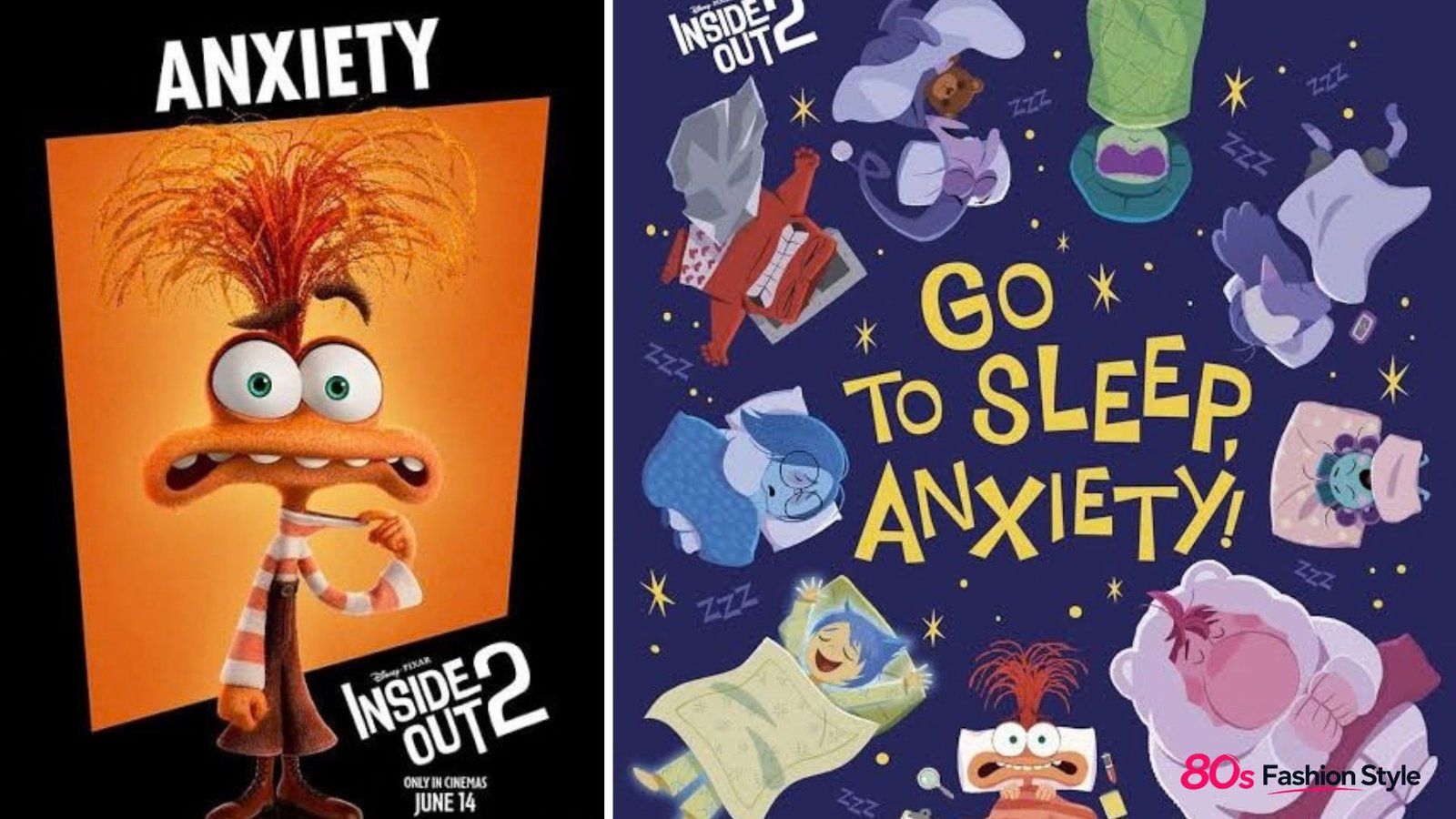
Anxiety is one of the most important new characters in Inside Out 2, Disney and Pixar’s 2024 animated sequel. As Riley enters her teenage years, her mind changes dramatically, and Anxiety arrives at Headquarters with a very different approach to keeping her safe. The character, voiced by Maya Hawke, quickly becomes central to Riley’s struggle with friendship, competition, self-image, and the fear of making mistakes.
For viewers searching for Anxiety Inside Out 2, the key point is that she is not simply a villain. Pixar presents Anxiety as an emotion trying to protect Riley, although her constant planning and focus on possible negative outcomes eventually become overwhelming.
Who Is Anxiety in Inside Out 2?
Anxiety is one of Riley’s new emotions after she reaches adolescence. Pixar describes her as energetic and intensely focused on preparing Riley for possible problems. She creates plans, considers worst-case scenarios, and worries about how Riley will fit in with her high-school peers.
Maya Hawke provides Anxiety’s voice, joining returning performers such as Amy Poehler as Joy, Phyllis Smith as Sadness, Lewis Black as Anger, Tony Hale as Fear, and Liza Lapira as Disgust. The movie was directed by Kelsey Mann and produced by Mark Nielsen.
Anxiety’s personality is deliberately busy and restless. She rarely seems satisfied with simply handling the present. Instead, she is constantly thinking about what could happen next.
That makes her especially relevant to Riley’s teenage experience, where social acceptance and uncertainty become much more complicated.
What Does Anxiety Want for Riley?
Anxiety’s central goal is protection. She believes Riley needs to anticipate problems before they happen. Her plans are meant to prevent embarrassment, rejection, disappointment, or failure.
The problem is that protection can become excessive.
In the story, Anxiety becomes increasingly concerned with Riley fitting in with the popular hockey players and making a strong impression. Her desire to secure Riley’s future pushes other emotions aside and contributes to a growing conflict inside Headquarters.
This is what makes Anxiety Inside Out 2 more interesting than a simple “bad emotion.” Her intentions are understandable. She wants Riley to succeed. Yet the methods she uses create additional pressure.
Pixar’s official character description specifically connects Anxiety with perfectionism and worst-case thinking.
Anxiety vs. Fear
Anxiety and Fear may appear similar, but they serve different narrative purposes.
| Emotion | Main concern | How it affects Riley |
|---|---|---|
| Fear | Immediate danger | Warns Riley about visible risks |
| Anxiety | Possible future problems | Plans ahead and anticipates negative outcomes |
| Envy | What others have | Makes Riley compare herself with others |
| Embarrassment | Social awkwardness | Reacts strongly to uncomfortable situations |
| Ennui | Boredom and apathy | Adds teenage indifference to Riley’s experience |
Fear generally reacts to something that could hurt Riley right now. Anxiety spends much more time imagining what might happen later. Pixar describes Fear as Riley’s protector against visible hazards, while Anxiety is focused on dangers that cannot yet be seen.
That distinction helps explain why the two emotions can coexist without being identical.
Why Anxiety Becomes Overwhelming
The emotional conflict in the film develops because Anxiety’s protective strategy has no obvious stopping point. If one possible problem is solved, another can appear.
Riley is trying to earn a place on a competitive hockey team while also navigating new friendships and her changing sense of identity. Pixar describes her as a newly minted teenager whose Sense of Self is rapidly changing.
Anxiety responds to that uncertainty by trying to control the outcome.
This creates an important theme: worrying about the future can sometimes become so consuming that the present gets lost.
💡 Pro Tip: When discussing the character with children or teenagers, focus on what Anxiety is trying to accomplish rather than calling her “bad.” The movie works better as a conversation about how an emotion can have a useful purpose while becoming unhelpful when it takes over.
What Does Anxiety Represent?
Anxiety Inside Out 2 works as a metaphor for the pressure that can accompany adolescence. Riley is no longer simply deciding what she enjoys. She is becoming more aware of how other people perceive her and what she believes she needs to become.
The film visualizes this through Riley’s Sense of Self and the changing Headquarters. Pixar explains that the sequel gave its creators an opportunity to explore emotions that become particularly prominent during the teenage years, including Anxiety, Envy, Embarrassment, and Ennui.
The metaphor is not a clinical explanation of anxiety disorders. Instead, it is a fictional representation of an emotional experience. That distinction matters because the movie personifies emotions for storytelling rather than attempting to provide a medical model.
Pixar’s own production material describes the sequel as a journey involving anxiety and changes in Riley’s belief system, reinforcing how closely these ideas are connected within the film’s story.
Anxiety and Riley’s Sense of Self
One of the sequel’s most significant ideas is that Riley’s identity is still developing.
Her beliefs about herself can be influenced by memories, relationships, achievements, mistakes, and the opinions of other people. Anxiety tries to protect that developing identity by steering Riley toward an imagined version of success.
But Riley cannot build a healthy identity simply by avoiding every possible mistake.
That is where the emotional message of Anxiety Inside Out 2 becomes especially meaningful. Riley needs different emotions to contribute rather than allowing one emotion to control every decision.
The movie therefore treats emotional balance as more complicated than simply choosing happiness over sadness or confidence over fear.
📌 Key Takeaway: Anxiety in Inside Out 2 represents Riley’s instinct to prepare for uncertainty and protect herself from negative outcomes. Her intentions are protective, but the story shows how constant pressure to control the future can interfere with accepting who you are in the present.
Who Voices Anxiety in Inside Out 2?
Maya Hawke voices Anxiety in the film. Her performance gives the character a rapid, energetic style that matches Anxiety’s tendency to jump from one concern to another. Disney’s official movie page confirms Hawke’s casting and lists the principal returning and new voice performers.
The casting is particularly effective for a character who needs to sound enthusiastic and worried at the same time. Anxiety often behaves as though every future possibility requires immediate attention.
That contrast is part of the character’s comedy, but it also supports the emotional tension at the heart of the story.
Is Anxiety the Villain?
Not exactly. Anxiety is an antagonist within parts of Riley’s emotional conflict, but she is not presented as an evil character with malicious intentions.
She believes her actions will help Riley. Her mistake is assuming that more preparation, more control, and fewer mistakes will automatically produce a better future.
That interpretation is consistent with Pixar’s description of Anxiety as an emotion determined to help Riley fit in and avoid negative outcomes.
The distinction between “villain” and “emotion causing problems” is important. The film’s broader premise is that Riley needs her emotions working together, not that one emotion should simply disappear.
Frequently Asked Questions
Is Anxiety the main character in Inside Out 2?
Anxiety is one of the sequel’s central characters, but Riley remains the protagonist. The story follows Riley as she enters adolescence, while Anxiety and the other emotions represent different pressures and responses inside her mind.
Who voices Anxiety in Inside Out 2?
Maya Hawke voices Anxiety. Disney’s official information for the film confirms her role alongside returning cast members including Amy Poehler, Phyllis Smith, Lewis Black, Tony Hale, and Liza Lapira.
What is Anxiety trying to do for Riley?
Anxiety believes she is protecting Riley by preparing her for possible negative outcomes. She worries about social acceptance, mistakes, and Riley’s future. Her intentions are protective, although her approach becomes increasingly controlling.
Is Anxiety the same as Fear?
No. Fear primarily reacts to immediate or visible danger, while Anxiety concentrates on possible future problems. Pixar deliberately gives the two emotions different functions within Riley’s mind.
What does Anxiety symbolize in the movie?
Anxiety symbolizes the uncertainty and pressure that can accompany growing up. Through Riley’s changing identity, the film explores concerns about belonging, performance, mistakes, and the desire to control an unpredictable future.
Conclusion
Anxiety Inside Out 2 is memorable because the character combines humor with a recognizable emotional conflict. She wants Riley to be prepared, accepted, and successful, but her constant focus on potential problems creates its own difficulties.
Rather than suggesting that Anxiety should disappear, Inside Out 2 presents a broader idea: growing up requires room for many emotions, including uncomfortable ones. Riley’s journey becomes less about eliminating anxiety and more about learning that uncertainty, mistakes, and changing feelings are all part of becoming herself.
