

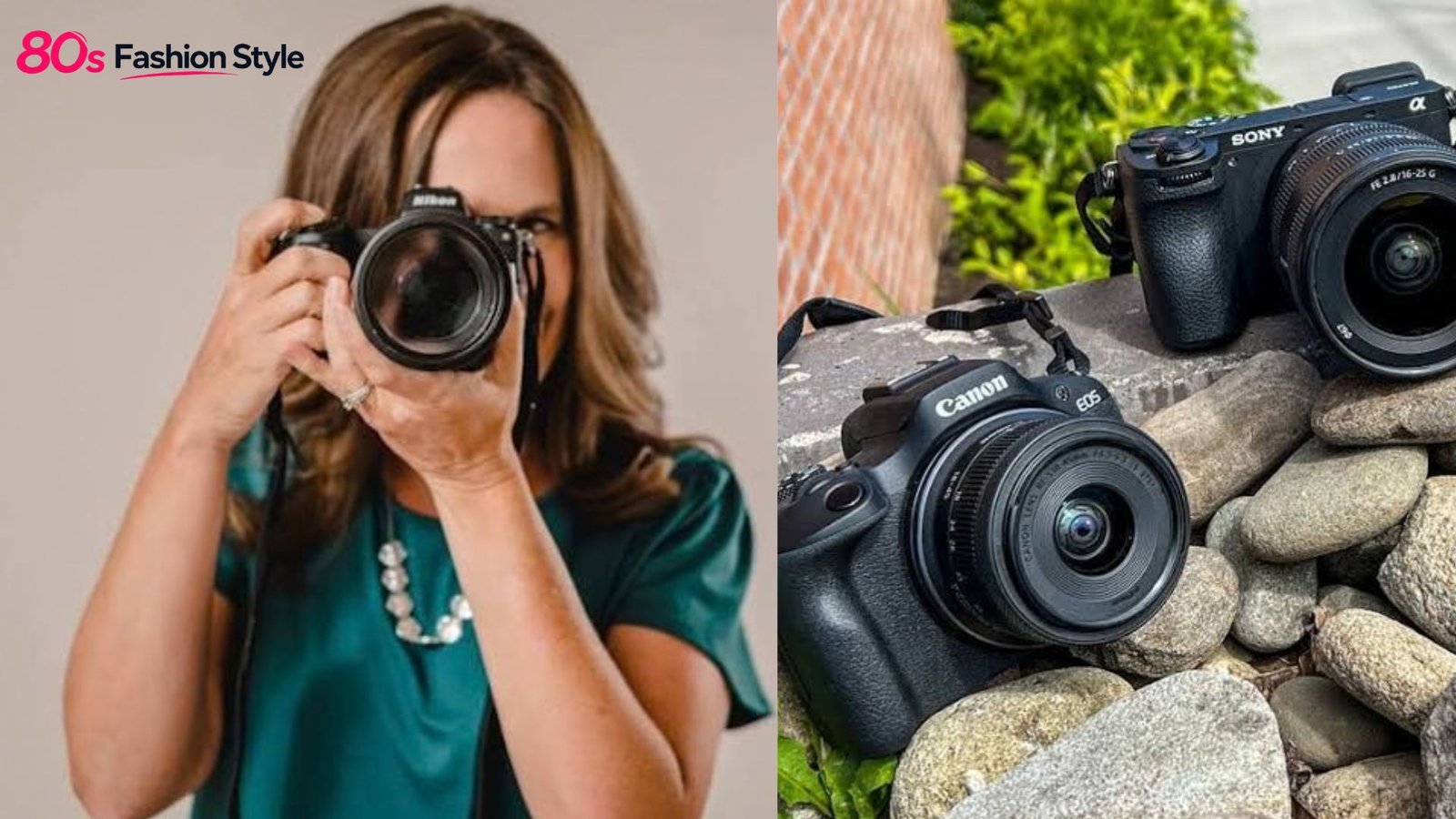
The best camera depends less on a single specification and more on what you photograph, how you shoot, and how much you plan to spend on lenses. Modern mirrorless cameras now cover everything from beginner photography and travel to professional video and demanding wildlife work. Current testing also shows how much the market has shifted toward mirrorless systems, although DSLRs remain useful, particularly on the used market.
For most buyers, the right starting point is to choose a camera system rather than simply chasing the highest megapixel count. Sensor size, autofocus, lens availability, stabilization, ergonomics, battery life, and video features can have a greater practical effect on your experience.
Best Camera Options for Different Needs
There is no universal winner because photographers have different priorities. A compact APS-C body can be a smarter travel companion than a large professional full-frame model, while a sports photographer may value autofocus speed and fast readout more than maximum resolution.
Current independent testing highlights several strong options across price ranges. The Nikon Z6III, for example, combines a 25MP full-frame sensor, strong subject tracking, in-body stabilization, and extensive video capabilities. The Fujifilm X-T5 offers a 40MP APS-C sensor and a control-focused design, while the Canon EOS R10 is a well-rounded entry-level choice.
| Camera type | Best suited to | Main advantage | Main compromise |
|---|---|---|---|
| APS-C mirrorless | Beginners, travel, enthusiasts | Smaller bodies and lenses | Less low-light flexibility than many full-frame models |
| Full-frame mirrorless | Professionals, portraits, hybrid shooting | Strong image quality and advanced features | Higher system cost and weight |
| Micro Four Thirds | Travel, video, wildlife | Compact lenses and bodies | Smaller sensor |
| DSLR | Photography-focused users and used buyers | Optical viewfinder and long battery life | Generally less advanced video and autofocus |
| Compact camera | Everyday carry and travel | Portability | Less flexibility than interchangeable-lens systems |
For beginners
A beginner does not necessarily need an expensive full-frame body. Current testing of entry-level models points to cameras such as the Canon EOS R10 and Sony α6400 as capable starting points, with dependable autofocus and good image quality. The Sony system also has a mature selection of native and third-party lenses, which can matter as your skills develop.
The lens should be part of the initial budget. A modest camera paired with an appropriate lens can produce more useful results than an expensive body paired with a poorly matched or very limited lens.
For travel photography
Travel favors a balance between image quality, size, battery life, and lens flexibility. APS-C mirrorless cameras are particularly practical because they can offer strong image quality without requiring the bulk of a large full-frame kit.
A compact zoom can also make sense if changing lenses is inconvenient. Before buying, consider how much equipment you are realistically willing to carry through airports, cities, hiking trails, or long days of sightseeing.
For portraits
Portrait photographers should look beyond megapixels. A larger sensor combined with a fast-aperture lens can provide attractive background separation, while accurate autofocus helps keep attention on the subject’s eyes.
Full-frame systems offer a broad selection of portrait-oriented lenses, but APS-C cameras can also produce excellent portraits. Spending more on a suitable prime lens may make a larger difference than upgrading to a more expensive body.
For wildlife and sports
Fast subjects place greater demands on autofocus, burst shooting, and sensor readout. The Nikon Z6III is one example of a camera designed around these requirements, with a partially stacked sensor that helps improve readout speed and reduce rolling-shutter effects. It also offers subject recognition and high-speed continuous shooting.
Long lenses are equally important. Wildlife photographers should calculate the complete system cost, including telephoto lenses, memory cards, batteries, and support equipment.
💡 Pro Tip: Before choosing a body, price the lens you are most likely to use for 70% of your photography. A camera system becomes much easier to compare once you know the real cost of the body-plus-lens combination.
What Makes a Good Camera?
Sensor size is one of the most important technical considerations. Larger sensors generally provide greater control over depth of field and can offer advantages in low-light photography, although lens choice and processing also influence results. Megapixel count matters for cropping and large prints, but it should not be treated as a complete measure of image quality.
Autofocus has become another major differentiator. Modern mirrorless cameras increasingly use subject-recognition systems that can identify people, animals, vehicles, and other subjects. For moving subjects, reliable tracking can be more valuable than simply having a high-resolution sensor.
Image stabilization is useful for handheld photography and video, particularly in low light. In-body image stabilization can help reduce camera shake, but it cannot freeze a moving subject; shutter speed still matters.
Video buyers should examine more than the headline resolution. Frame rates, crop factors, internal recording formats, bit depth, autofocus behavior, stabilization, microphone connections, and overheating limits can all affect real-world filmmaking. The Panasonic LUMIX S5 II, for instance, is tested as a particularly capable video-focused full-frame mirrorless option, with 6K recording, 10-bit 4:2:2 capture, and effective stabilization.
Mirrorless vs. DSLR
Mirrorless cameras dominate the current interchangeable-lens market, with manufacturers concentrating new development around electronic viewfinders, fast autofocus, advanced video, and modern lens mounts.
DSLRs still have advantages. Their optical viewfinders provide a direct view through the lens, battery life can be excellent, and used cameras can offer substantial value. For photographers who primarily shoot still images and already own compatible DSLR lenses, moving immediately to mirrorless may not be necessary.
The best camera for an existing photographer may therefore be different from the best starting point for someone building a system from scratch.
📌 Key Takeaway: Choose the camera around your subjects and shooting habits first. Then compare sensor size, autofocus, stabilization, lens costs, video features, and handling. The body is only one part of a camera system.
Frequently Asked Questions
Is a mirrorless camera better than a DSLR?
Mirrorless cameras generally offer newer autofocus and video technologies and have become the main focus of current interchangeable-lens development. DSLRs can still be excellent for photography, particularly for users who value optical viewfinders, long battery life, or inexpensive used equipment.
How many megapixels do I need?
For everyday photography, you do not need an extremely high-resolution sensor. Around 20–30MP is already enough for many uses, while higher resolutions become more useful for heavy cropping, detailed landscapes, commercial work, and large prints. Sensor quality, lens performance, autofocus, and shooting technique also matter.
Is full-frame worth the extra cost?
Full-frame can provide advantages in low-light work, depth-of-field control, and overall system capability, but it is not automatically necessary. APS-C cameras can be smaller and less expensive while delivering excellent results. The right choice depends on your subjects, lenses, budget, and tolerance for carrying larger equipment.
What camera is good for both photos and video?
Hybrid mirrorless cameras are generally the most flexible choice. Models such as the Nikon Z6III combine strong still photography with advanced video functions, while the Panasonic LUMIX S5 II is particularly focused on video capabilities.
Should I spend more on the camera body or lens?
For many photographers, allocating more of the budget to a suitable lens can be more useful than buying the most expensive body available. Lenses influence focal length, maximum aperture, background separation, and optical performance, while the body determines features such as autofocus, stabilization, resolution, and handling.
The best camera is the one that fits your actual photography rather than the one with the longest specification sheet. Start with your subjects, set a realistic total budget, and investigate the lenses available for the system. That approach makes it easier to build a kit you will actually carry and use.
