

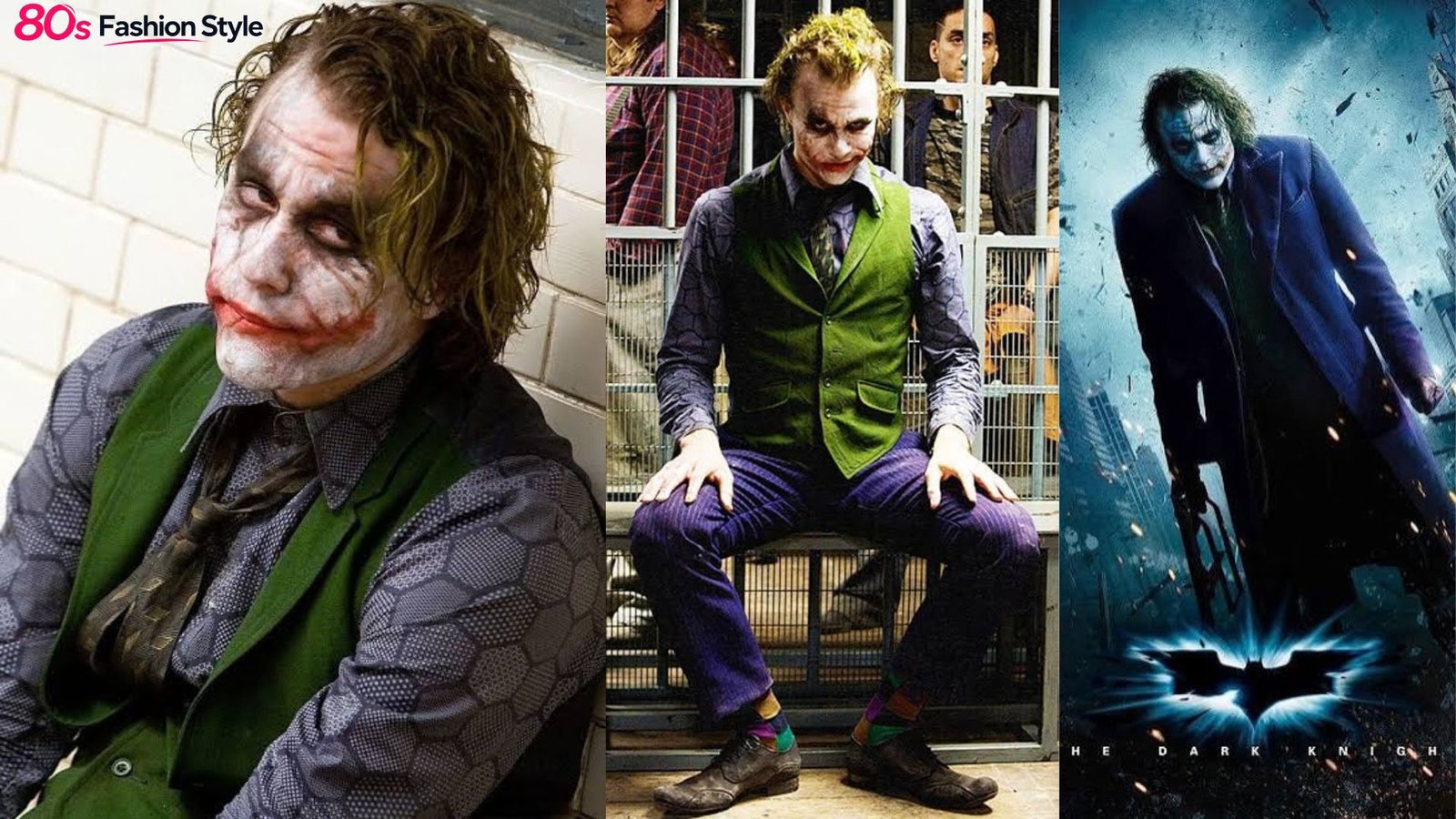
Heath Ledger Joker remains one of the most discussed comic-book performances in modern cinema. Ledger played the character in Christopher Nolan’s The Dark Knight (2008), creating a version of the Joker defined less by a conventional origin story and more by unpredictability, manipulation, dark humor, and chaos.
The performance became a major part of the film’s identity and earned Ledger the Academy Award for Best Supporting Actor after his death. The Academy records the award as a posthumous win for his role as the Joker.
For viewers searching for what made the performance distinctive, the answer goes beyond makeup and mannerisms. Ledger built a character whose voice, physical movements, pauses, humor, and apparent contradictions made every scene difficult to predict.
Heath Ledger Joker in The Dark Knight
Ledger’s Joker is not presented as a character with a clearly established biography. Instead, the film deliberately keeps his background uncertain. Even his stories about his facial scars change, making it difficult for Batman and the audience to separate truth from manipulation.
That uncertainty was central to the filmmaking approach. Director Christopher Nolan described the character as representing “pure anarchy” and said Ledger developed the role through wardrobe fittings, makeup tests, movement, and energy over time.
This distinguishes Ledger’s interpretation from portrayals that depend heavily on explaining who the Joker was before becoming a criminal. In The Dark Knight, his lack of a reliable history becomes part of his power.
What Made Ledger’s Performance So Distinctive?
The most recognizable elements of Heath Ledger Joker include the voice, physicality, facial expressions, and deliberately irregular speech patterns.
1. The voice
Ledger avoided a normal conversational delivery. His voice could become soft, rough, breathy, or suddenly aggressive. That instability helped create tension because viewers could not always predict how the next sentence would sound.
The Guardian’s review of Ledger’s work specifically highlighted his voice and delivery as important parts of the performance.
2. Physical movement
The Joker rarely behaves like a conventional villain. Ledger frequently used loose shoulders, unusual posture, sudden gestures, and restless movements. His body language often suggested that he was performing for everyone around him.
Those choices made relatively simple actions—walking into a room, standing beside someone, or handling an object—feel deliberately theatrical.
3. Unpredictable humor
The character frequently treats frightening situations as entertainment. His jokes are not simply comic relief; they often destabilize the people around him.
That contrast is one reason the performance works so effectively. A smile can accompany a threat, while a seemingly casual conversation can turn dangerous within seconds.
The Joker’s Makeup and Visual Design
Ledger’s appearance in The Dark Knight is intentionally different from a polished comic-book interpretation. The white face, dark eye makeup, greenish hair, and red mouth create the familiar visual identity, but the presentation feels worn and improvised.
The makeup also contributes to the character’s uncertainty. The Joker does not look like someone who carefully maintains a perfect disguise. Instead, his appearance suggests someone who has deliberately turned himself into a disturbing public persona.
His scars are particularly important because the film never provides a definitive explanation. The Joker tells different stories about them, reinforcing the idea that he controls the narrative whenever he speaks.
| Element | Function in the performance |
|---|---|
| Voice | Creates tension and unpredictability |
| Body language | Makes ordinary movements feel threatening |
| Makeup | Gives the character a damaged, improvised appearance |
| Humor | Contrasts comedy with violence and fear |
| Scar stories | Reinforce uncertainty about his past |
| Improvisational feel | Makes interactions appear difficult to predict |
💡 Pro Tip: When analyzing Ledger’s Joker, watch scenes for the pauses between lines rather than focusing only on the dialogue. His timing, stillness, and small physical reactions often communicate as much as the words themselves.
Heath Ledger Joker and Batman
The character works particularly well because he is constructed as a disruptive force against Batman’s attempt to impose order.
Batman relies on rules, preparation, technology, and controlled decision-making. The Joker repeatedly challenges those assumptions. His actions force Batman to respond to situations where conventional logic is not enough.
This conflict gives the performance more depth than simply presenting the Joker as a dangerous criminal. Ledger portrays someone who appears interested in testing other people rather than pursuing a conventional criminal objective.
The result is a villain whose presence changes the behavior of nearly everyone around him.
Did Heath Ledger Win an Oscar for the Joker?
Yes. Heath Ledger posthumously won the Academy Award for Best Supporting Actor for The Dark Knight at the 81st Academy Awards in 2009. His family accepted the award on his behalf.
The Academy’s records identify the nominated character as the Joker and list The Dark Knight among Ledger’s award achievements.
The award was significant because it formally recognized a comic-book villain performance in one of the major acting categories. Ledger had previously received an Academy Award nomination for Best Actor for Brokeback Mountain at the 78th Academy Awards.
Why the Performance Still Gets Discussed
The continuing interest in Heath Ledger Joker comes partly from how complete the characterization feels despite the limited information about the character.
Ledger did not rely on a long explanation of the Joker’s childhood or motivations. Instead, the audience learns about him through behavior. His contradictions become the characterization: he can be funny and terrifying, controlled and chaotic, theatrical and strangely quiet.
The performance also fits Nolan’s broader approach to The Dark Knight. The film treats Gotham’s conflict through crime, morality, fear, and competing ideas about order. The Joker becomes the character who continually disrupts those systems.
📌 Key Takeaway: Heath Ledger Joker is memorable not simply because of the makeup or the character’s reputation. Ledger combined voice, timing, movement, humor, silence, and ambiguity to create a performance that feels unpredictable from scene to scene.
Frequently Asked Questions
Who played the Joker in The Dark Knight?
Heath Ledger played the Joker in Christopher Nolan’s The Dark Knight, released in 2008. His portrayal became the film’s central opposing force to Christian Bale’s Batman and later earned Ledger a posthumous Academy Award for Best Supporting Actor.
Why does the Joker have scars in The Dark Knight?
The film intentionally does not provide one confirmed explanation. The Joker tells different stories about how he received his scars. This uncertainty fits the character’s tendency to manipulate people and makes his personal history deliberately unreliable.
Did Heath Ledger win an Oscar for playing the Joker?
Yes. Ledger won the 2009 Academy Award for Best Supporting Actor for The Dark Knight. His father, mother, and sister accepted the Oscar on his behalf.
Was Heath Ledger’s Joker based on one specific comic-book story?
The performance draws on the established comic-book character but is not simply a direct recreation of one storyline. Nolan and Ledger developed a version centered on chaos, uncertainty, and psychological conflict rather than a clearly defined origin.
What makes the performance different from other Joker portrayals?
Ledger emphasizes unpredictability and physical behavior. His unusual voice, pauses, posture, gestures, humor, and constantly shifting stories create a character who appears impossible for the other characters to fully understand.
Conclusion
Heath Ledger Joker remains a defining performance because the character feels larger than a conventional superhero villain while still being grounded in specific acting choices. Ledger’s voice, physicality, makeup, timing, and refusal to provide a stable personal history all contribute to that effect.
More than a memorable comic-book interpretation, the performance demonstrates how uncertainty itself can become a powerful storytelling tool. The Dark Knight gives the Joker very few reliable answers—and Ledger uses that uncertainty to keep the character fascinating.
